Go (Golang) is rapidly gaining popularity for building fast, scalable, and efficient web applications. Learn why developers and companies are choosing Go, its benefits, use cases, and how it compares to other backend technologies.
In the world of web development, speed, scalability, and simplicity matter more than ever. While languages like JavaScript, Python, and PHP continue to dominate, Go (often called Golang) is quickly emerging as a powerful alternative for building modern web applications.
Created by Google engineers, Go is designed for performance, simplicity, and concurrency — making it one of the best choices for backend APIs, microservices, real-time systems, and high-traffic platforms.
If you’re looking to build efficient and scalable web applications, Go might be the perfect fit.
What Is Go (Golang)?
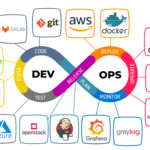
DevOps is a combination of Development (Dev) and Operations (Ops), focused on improving collaboration and automating processes throughout the software lifecycle — from coding and testing to deployment and monitoring.
Instead of working in isolated silos, DevOps teams share responsibility and work continuously to deliver features and fix issues.
DevOps emerged as a powerful solution: a cultural and technical approach that bridges development and operations to deliver software faster, more reliably, and with continuous improvement at its core.
“Go (Golang) is rapidly becoming one of the top languages for modern web development. With its unmatched performance, built-in concurrency, and simplicity, Go offers everything needed to build scalable, reliable, and future-ready web applications.”
Why Go Is Great for Web Development
1 Lightning-Fast Performance
Go compiles directly to machine code, making it significantly faster than interpreted languages like Python or Node.js.
This speed is essential for:
Real-time applications
APIs
High-traffic websites
Cloud-native apps
With Go, your server can handle thousands of requests effortlessly.
2 Built-In Concurrency (Goroutines)
Concurrency is where Go truly shines.
Instead of threads, Go uses goroutines, which are lightweight and extremely efficient.
This makes Go perfect for:
Chat applications
Live streaming
Background jobs
Real-time dashboards
High-load backend services
Goroutines run concurrently, allowing massive scalability with minimal resource usage.
3 Minimalistic and Easy to Learn
Go’s syntax is clean and minimal.
No complicated OOP concepts.
No heavy frameworks.
No confusing dependency systems.
Developers can learn Go quickly and start building production-ready web services faster.
4 Strong Standard Library
Go comes with a rich standard library that includes:
HTTP server
JSON handling
Cryptography
Templates
File handling
You don’t always need external packages — the built-in tools are powerful enough for most web apps.
5 Ideal for Microservices Architecture
Tech companies like Uber, Netflix, Medium, and Dropbox use Go to build microservices.
Benefits:
Small, deployable binaries
Fast startup time
Easy containerization
Low memory usage
Go and Docker are a perfect match — making it the preferred language for cloud-native development.
Popular Web Frameworks in Go-
1. Gin
Fast, lightweight, great for REST APIs.
2. Fiber
Inspired by Express.js, easy and fast.
3. Echo
Minimalistic, high-performance.
4. Chi
Great for large-scale applications.