
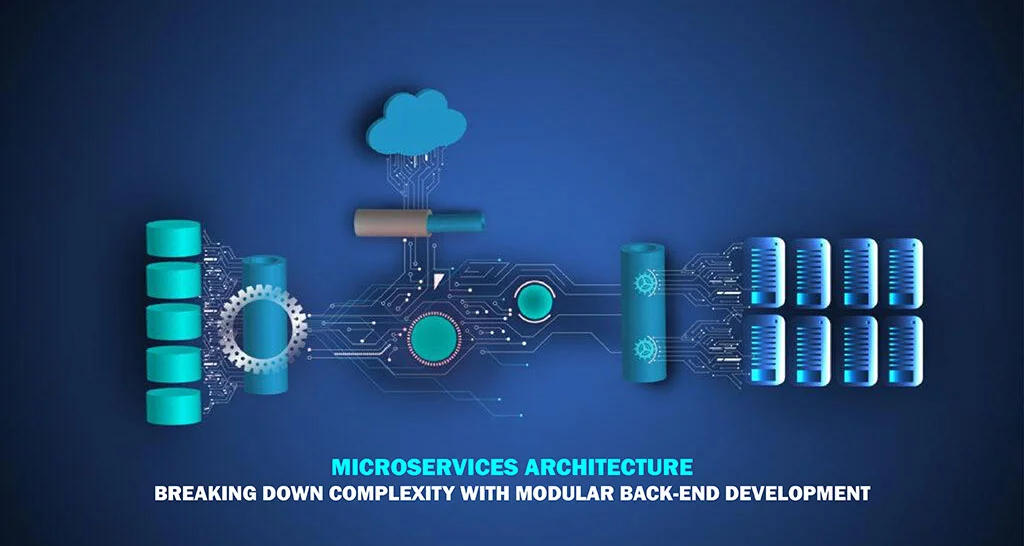
Microservices architecture is transforming modern software development. Learn how microservices work, their benefits, challenges, and real-world examples powering today’s most scalable applications.
In today’s fast-paced software environment, applications are expected to scale quickly, deploy faster, and adapt to continuously evolving user needs. Traditional monolithic architecture—where an entire application is built as a single tightly coupled unit—works well for small projects, but becomes difficult to maintain and scale as the system grows. This is where microservices architecture has emerged as a game-changing approach. Rather than building one large application, microservices break an application into multiple independent services, each responsible for a specific function and communicating through APIs. These services can be developed, deployed, and scaled separately, offering organizations greater flexibility and agility.
What is Micro Services?
Microservices architecture is transforming modern software development. Learn how microservices work, their benefits, challenges, and real-world examples powering today’s most scalable applications.microservices architecture has quickly become the standard for building modern, scalable applications. While it introduces operational complexities, the benefits in scalability, flexibility, and rapid deployment make it ideal for businesses aiming to support large user bases and continuous product evolution. With the right tooling, DevOps culture, and development practices, microservices empower organizations to innovate faster and build more resilient systems.
“Microservices are not always necessary for every project. They are most effective for growing applications with large teams, frequent deployments, and evolving business requirements. For smaller projects or MVPs, monolithic architecture may still be a simpler and cost-effective choice. The key is to adopt microservices when the scalability and flexibility advantages outweigh the operational overhead. “
Despite the advantages, microservices architecture comes with challenges. Since the system is distributed into multiple services, managing communication, logging, debugging, and security becomes significantly more complex. Services must communicate reliably through REST APIs, gRPC, or messaging queues like Kafka or RabbitMQ. Ensuring data consistency across distributed services also requires careful planning, especially when avoiding shared databases. Observability is another major challenge, requiring tools like Prometheus, Grafana, Jaeger, and ELK Stack for monitoring and tracing.